


Dementia Treatment
Dementia Treatment– When an elderly parent starts asking the same question several times, forgets familiar names or struggles with everyday tasks, family members often put it down to ageing. It may seem harmless at first. But when these incidents become frequent, it is natural to wonder whether something else is happening.
Memory loss deserves attention when it begins affecting a person’s everyday life. Dementia is one possible cause. It affects memory, thinking, communication and the ability to manage familiar activities.
Dementia Treatment: Understanding Memory Loss and the Care Available
Although most forms of dementia cannot currently be cured, timely assessment and appropriate Dementia Treatment can help manage symptoms and support a person’s quality of life.
For families, understanding what is happening is often the first challenge. Knowing what to look for, which doctor to consult and what treatment can realistically achieve makes the situation easier to approach.
When Forgetfulness Becomes More Than an Ageing Concern
Everyone forgets things occasionally. An older person may misplace their spectacles, forget an appointment or take a little longer to remember someone’s name. These incidents alone do not mean that the person has dementia.
The concern begins when memory difficulties become frequent and start interfering with familiar activities. Someone who has managed household finances for years may suddenly struggle with bills. A person may forget the route to a nearby shop or become confused while following a recipe they have prepared many times.
Dementia is not a single disease. It is a term used for a group of conditions that affect the brain’s ability to process information. Memory is often affected, but changes can also involve language, judgement, concentration, behaviour and decision-making.
Alzheimer’s disease is the most common cause of dementia. Other forms include vascular dementia, dementia with Lewy bodies and frontotemporal dementia. Each has its own pattern of symptoms, which is why identifying the underlying condition matters.
Another point worth understanding is that memory loss does not always mean dementia. Depression, poor sleep, thyroid problems, vitamin deficiencies and certain medicines can also affect memory and concentration. Some of these causes may be treatable. A medical assessment helps distinguish between them.
Changes Families Should Pay Attention To
Often, the person experiencing memory problems may not recognise how much their routine has changed. A family member, spouse or close friend may notice it first.
The changes are not always dramatic. They may begin with small incidents that gradually become harder to ignore.
Repeatedly Asking the Same Questions
A person may ask about an appointment, receive an answer and then ask the same question again a few minutes later. They may also forget recent conversations or struggle to remember something that happened earlier in the day.
Difficulty With Familiar Activities
Tasks that once required little thought may become confusing. Managing money, preparing meals, using household appliances, or following instructions may take considerably longer.
Getting Confused About Time and Place
Some people lose track of dates or become unsure about where they are. In more noticeable cases, they may get lost in familiar surroundings.
Changes In Speech and Communication
Finding the right word can become difficult. A person may lose track of a conversation, struggle to explain something or have trouble following what others are saying.
Changes In Behaviour or Personality
Families may notice unusual irritability, anxiety, suspicion or withdrawal. Someone who was previously comfortable in social situations may begin avoiding them.
These signs do not confirm dementia on their own. What matters is the pattern, how long the changes have been occurring and how much they affect daily life. If you notice a consistent decline, arrange a medical assessment rather than assuming it is simply part of growing older.
Sudden confusion, sudden weakness, facial drooping or difficulty speaking needs emergency medical attention. These symptoms may indicate an acute medical problem, including a stroke, and should not wait for a routine appointment.
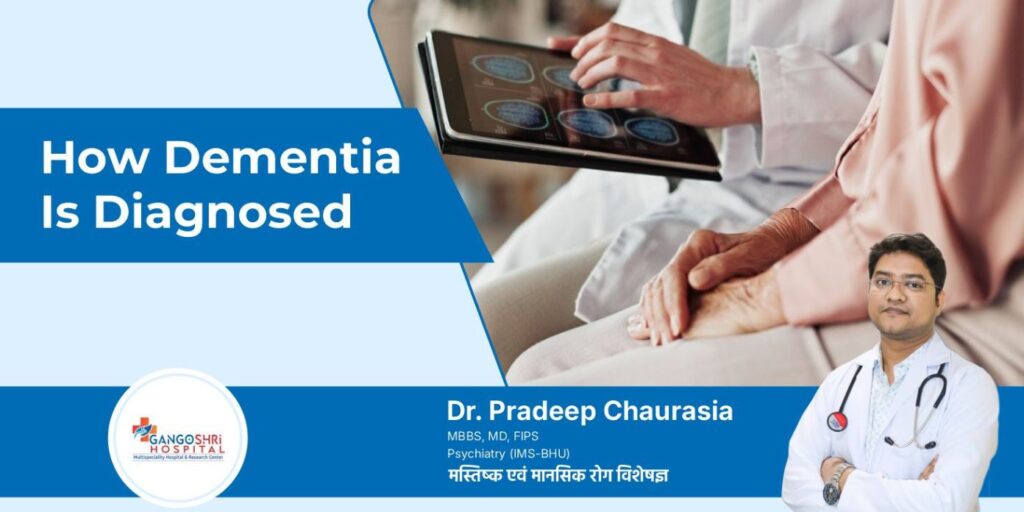
How Dementia Is Diagnosed
One of the most difficult decisions for families is knowing when to take a loved one to the doctor. They may worry about upsetting the person or fear that discussing memory problems will make them feel uncomfortable.
A consultation does not mean that dementia will automatically be diagnosed. It is an opportunity to understand what has changed and investigate possible reasons.
The doctor will usually begin by asking about the person’s memory, behaviour and daily routine. When did the problems start? Are they becoming more frequent? Does the person still manage household activities independently? Has there been a noticeable change in mood or sleep?
A family member who knows the patient well can provide useful information during this discussion. Previous prescriptions, medical reports and details of existing health conditions may also help.
Depending on the symptoms, the assessment may include:
-
Memory and thinking tests to assess attention, recall, language and problem-solving.
-
A physical and neurological examination.
-
Blood tests to look for conditions that may contribute to memory problems.
-
Brain imaging, such as an MRI or CT scan, when clinically appropriate.
There is no single test that explains every case. The doctor considers the patient’s symptoms, medical history and investigation results together.
An early assessment also gives families time to discuss future care, treatment choices and practical arrangements while the person can still participate in these decisions.
Dementia Treatment: What Can Actually Help?
Families often ask whether dementia can be cured. The honest answer is that most progressive forms of dementia cannot currently be reversed. However, treatment can still make a difference.
The aim is to manage symptoms, address other health problems, maintain independence where possible and make everyday life more manageable.
The treatment plan depends on the type of dementia, the stage of the condition and the person’s general health.
Medication For Dementia
Certain medicines may help manage symptoms in some patients. For Alzheimer’s disease, doctors may prescribe medicines such as donepezil, rivastigmine or galantamine. Memantine may also be considered in particular cases.
These medicines do not cure Alzheimer’s disease or restore lost brain function. However, they may help some people maintain their abilities for a period of time.
In vascular dementia, managing conditions such as high blood pressure, diabetes and high cholesterol may be an important part of care. This can help address factors associated with further damage to blood vessels.
The choice of dementia medication should always be made by a qualified doctor. Age, other illnesses, current medicines and possible side effects all need consideration. Families should not start, stop or change a prescription without medical advice.
Dementia Treatment Without Medication
Medicine is not the only part of dementia care. Daily activities, a familiar environment and support from family members can help a person manage changes in memory and thinking.
Simple activities such as listening to familiar music, looking through old photographs, reading or having conversations about familiar subjects may encourage engagement. The activity should suit the person’s abilities rather than become another source of pressure.
A predictable daily routine can also help. Regular meal times, familiar surroundings and clearly arranged belongings may reduce confusion.
Physical activity, where suitable for the person’s health and mobility, can support general well-being. Social interaction also matters. Spending time with familiar people can help reduce isolation.
These measures are supportive, not a cure. People looking for dementia treatment without medication should understand that non-medication care may be useful, but it does not replace medical assessment or prescribed treatment when these are needed.
Caring for Someone with Dementia at Home
A dementia diagnosis changes family routines in ways that are not always easy to anticipate. A person may need reminders to eat, help with medicines or assistance with activities they previously managed independently.
The way family members communicate can make a difference. Long explanations and several instructions at once may create confusion. Short, clear sentences and enough time to respond are often more helpful.
Try not to turn every forgotten detail into a correction. If someone repeats a question, answering calmly may be more useful than pointing out that they have already asked it. Arguments about things the person cannot remember can cause unnecessary distress.
Safety also needs attention. Depending on the person’s condition, families may need to review cooking arrangements, bathroom safety, medication storage and the possibility of wandering.
Caregivers should not overlook their own well-being. Looking after someone with dementia can be emotionally and physically demanding. Sharing responsibilities with other family members and discussing difficulties with a healthcare professional can help prevent one person from carrying the entire burden.
As dementia progresses, the person’s needs may change. The care arrangement that works today may need to be reviewed later. Regular medical follow-up helps families prepare for those changes.
Finding Dementia Treatment in Varanasi
When families search for dementia treatment near me, they are often looking for answers about a parent or elderly relative whose memory or behaviour has changed. Choosing a doctor with relevant experience in geriatric mental health and neuropsychiatry can help them understand where to begin.
Before booking an appointment, consider the doctor’s qualifications, experience with memory-related concerns and approach to assessment. It is also useful to ask about follow-up consultations and whether further investigations or specialist referrals may be required.
In India, dementia care generally involves identifying the underlying condition, managing treatable contributing factors, considering medication where appropriate and supporting the patient and family through the changes.
At Gangoshri Hospital, Varanasi, Dr. Pradeep Chaurasia practises as a Consultant Neuropsychiatrist, Psychiatrist and Sexologist. He holds an MBBS and an MD in Psychiatry from the Institute of Medical Sciences, Banaras Hindu University.
His areas of practice include neuropsychiatry, geriatric mental health, memory-related concerns and dementia. Families concerned about an older relative’s memory, behaviour or cognitive changes can enquire about a consultation.
It is helpful to bring previous medical reports, prescriptions and a list of current medicines. A family member who has noticed the changes can also accompany the patient and explain what has been happening at home.
Patients can contact Gangoshri Hospital to enquire about Dr. Pradeep Chaurasia’s availability and the consultation process.
Frequently Asked Questions
Can Dementia Be Cured?
Most progressive forms of dementia cannot currently be cured. However, treatment can help manage symptoms and support everyday functioning. Some memory problems caused by other medical conditions may improve when you treat the underlying cause.
What Is the Treatment for Early-Stage Dementia?
Early-stage care depends on the underlying diagnosis. It may include medication where appropriate, cognitive activities, physical activity, management of other health conditions and support with daily routines. Early assessment also helps families plan for future needs.
Is Alzheimer’s Disease the Same as Dementia?
No. Dementia is a general term for conditions affecting memory and thinking. Alzheimer’s disease is one specific condition and the most common cause of dementia.
Can Dementia Be Treated Without Medication?
Non-medication approaches, including familiar routines, social interaction and suitable mental and physical activities, can support people living with dementia. Whether medication is also needed depends on the diagnosis and symptoms.
When Should I Consult a Dementia Specialist?
Consider an assessment when memory problems become frequent, familiar tasks become difficult, or there are noticeable changes in communication, judgement or behaviour. Sudden confusion or sudden neurological symptoms require urgent medical attention.
How Can Family Members Help Someone with Dementia?
Family members can help by maintaining familiar routines, communicating patiently, keeping the home environment safe and encouraging suitable activities. They should also seek guidance as the person’s care needs change.
Conclusion
Watching a parent or loved one struggle with memories and familiar activities can be difficult. Families may spend months trying to understand the changes before deciding to seek medical advice.
A timely assessment can help explain what is happening and whether treatment or additional support is needed. Although most forms of dementia cannot be reversed, suitable medical care and everyday support can help a person maintain their abilities and dignity for as long as possible.
For families in Varanasi concerned about memory loss, cognitive changes or dementia, Dr. Pradeep Chaurasia at Gangoshri Hospital offers consultation in neuropsychiatry and geriatric mental health. A discussion with a qualified professional can help families understand the condition and make informed decisions about the care ahead.